
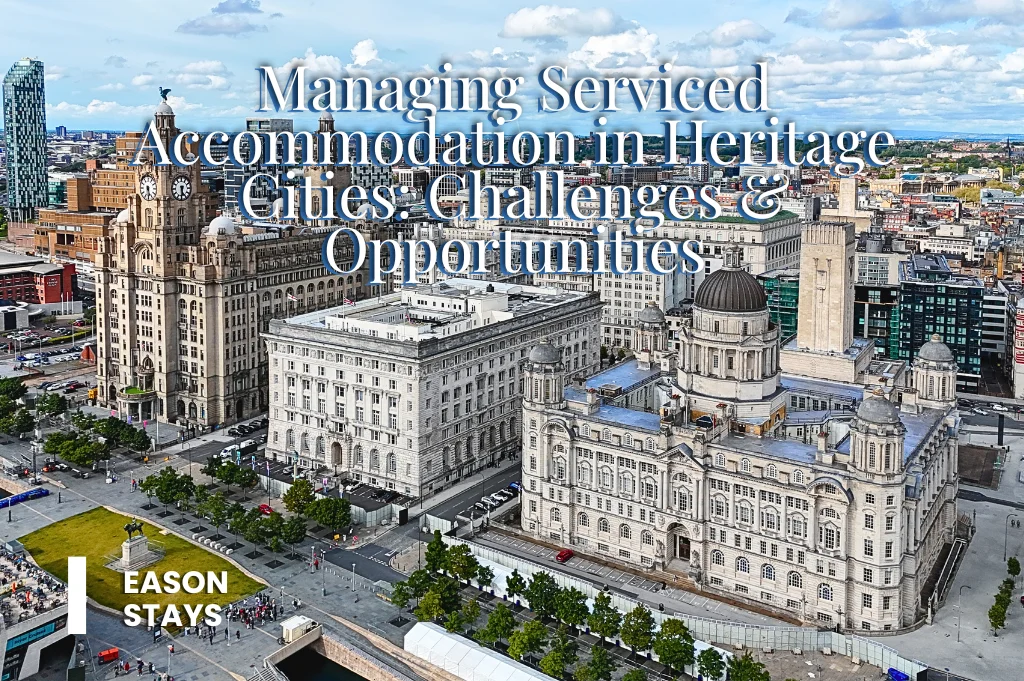
Heritage cities across the UK hold enduring appeal. From medieval streets and listed Georgian terraces to cathedral skylines and Roman walls, these locations attract steady tourism and cultural interest year after year. Cities such as York, Chester, Bath, Edinburgh, and Canterbury consistently draw visitors for history, architecture, festivals, and academic institutions.
For landlords, operating serviced accommodation heritage cities UK markets can be highly rewarding. However, these cities also come with unique regulatory, operational, and structural challenges that differ significantly from modern urban developments.
In this guide, we explore the key opportunities and obstacles of managing serviced accommodation in heritage locations — and how landlords can position themselves strategically.

Why Heritage Cities Remain Attractive for Serviced Accommodation
Heritage cities typically offer:
- Strong year-round tourism appeal
- Cultural and festival calendars
- University-related demand
- Corporate conference traffic
- International visitor interest
Unlike purely leisure resorts, heritage cities often combine tourism with:
- Government institutions
- Academic conferences
- Professional service sectors
- Healthcare and relocation stays
This mix creates diverse demand streams.

The Opportunity: Consistent Visitor Demand
Heritage cities benefit from predictable visitor cycles:
- Spring and summer tourism
- Autumn cultural events
- Christmas markets
- University term cycles
- Conference and academic demand
In cities like Edinburgh or York, accommodation demand is not confined to summer alone. Seasonal peaks are strong, but shoulder seasons often remain active.
For landlords, this provides:
- High ADR potential during events
- Stable occupancy outside peak tourism
- Premium pricing power for character properties
The Appeal of Character Properties
In heritage cities, guests often prefer properties that reflect local architecture and history.
Features that attract bookings include:
- Exposed beams
- Period fireplaces
- Georgian sash windows
- Stone-built façades
- Riverside views
When marketed correctly, these unique elements can justify premium nightly rates.

The Challenge: Strict Planning & Licensing Regulations
Heritage cities frequently operate under tighter planning controls.
Common regulatory challenges include:
- Listed building restrictions
- Conservation area limitations
- Short-term rental licensing requirements
- Planning use class scrutiny
- Noise and occupancy restrictions
For example:
- Edinburgh has introduced short-term let licensing requirements
- York and Bath operate strict conservation oversight
- Chester’s historic centre contains numerous listed properties
Compliance is not optional — and failure to understand local frameworks can result in fines or operational disruption.
Structural & Maintenance Considerations
Older buildings often come with:
- Limited insulation
- Outdated wiring
- Plumbing constraints
- Uneven flooring
- Conservation-approved material requirements
Renovation work may require specialist contractors and planning consent.
This can increase:
- Upfront capital expenditure
- Ongoing maintenance costs
- Turnaround time for repairs
Landlords must budget accordingly.

Noise & Neighbour Relations
Heritage city centres often include:
- Narrow streets
- High footfall
- Mixed residential-commercial areas
Local authorities may respond quickly to noise complaints, particularly in densely packed historic zones.
Clear guest screening and house rules are essential to maintaining neighbour relations.
The Opportunity: Premium Branding & Positioning
Despite regulatory hurdles, heritage cities allow landlords to create strong branding around:
- Historic ambience
- Cultural immersion
- Boutique-style accommodation
- Architectural authenticity
Serviced accommodation in these markets can often command higher nightly rates than similar-sized properties in non-heritage locations.
Diversifying Guest Profiles Beyond Tourism
Successful landlords do not rely solely on leisure guests.
Heritage cities also attract:
- University lecturers and visiting academics
- Legal and financial professionals
- NHS placements
- Government contractors
- Corporate relocation assignments
Targeting mid-term stays stabilises occupancy during off-peak tourism months.
This reduces exposure to serviced accommodation seasonality UK trends.
Pricing Strategy in Heritage Locations
Dynamic pricing is essential.
Key considerations include:
- Festival and event premiums
- Shoulder-season adjustments
- Mid-term corporate discounts
- Minimum stay flexibility
- Weekday vs weekend optimisation
Heritage city markets can be highly competitive — particularly during peak periods — requiring close monitoring.

Managing Guest Expectations
Guests booking heritage properties expect:
- Authentic charm
- High cleanliness standards
- Modern comforts within historic settings
- Transparent descriptions
Clear communication is critical if properties include:
- Steep staircases
- Low ceilings
- Limited lift access
- Older layouts
Honest listing descriptions reduce complaints and improve reviews.
The Operational Importance of Professional Oversight
Managing serviced accommodation in heritage cities requires:
- Licensing compliance
- Planning awareness
- Pricing expertise
- Guest screening
- Rapid maintenance coordination
Across multiple UK cities, Eason Stays works with landlords to navigate these complexities — helping balance regulatory requirements with revenue optimisation in both heritage and modern markets.
Insurance & Risk Management
Historic properties may require:
- Specialist building insurance
- Listed building coverage
- Conservation-sensitive repair provisions
Insurance premiums can differ from standard new-build apartments.
Landlords should factor this into yield calculations.
The Competitive Landscape
In heritage cities, supply often includes:
- Boutique hotels
- Converted townhouses
- Holiday cottages
- Independent Airbnb hosts
Professional presentation and pricing strategy differentiate well-managed serviced accommodation from casual listings.

Balancing Authenticity with Modern Comfort
The most successful heritage serviced accommodation combines:
- Period charm
- Modern bathrooms
- High-speed Wi-Fi
- Updated kitchens
- Comfortable furnishings
Guests want character — but not at the expense of comfort.
Long-Term Outlook for Heritage Markets
Heritage cities benefit from:
- Enduring cultural appeal
- International tourism resilience
- Academic institutions
- Government and legal sectors
- Architectural preservation
Demand cycles may fluctuate, but long-term visitor interest remains strong.
For landlords prepared to navigate regulation and maintenance complexity, these markets offer premium potential.
Key Takeaways for Landlords
Managing serviced accommodation heritage cities UK markets requires:
- Regulatory awareness
- Budgeting for higher maintenance
- Strategic guest targeting
- Dynamic pricing
- Professional oversight
The opportunities are significant — but so are the responsibilities.
Final Thoughts: High Potential, Higher Responsibility
Heritage cities present a unique blend of charm, demand, and operational complexity.
While regulatory frameworks and building restrictions can add layers of difficulty, these markets also allow landlords to:
- Command premium rates
- Target international guests
- Diversify demand streams
- Build strong brand positioning
Success depends on structured management and long-term planning.
Discover Your Heritage Property’s Potential
If you own property in a heritage UK city and want clarity on how to maximise performance while remaining compliant, a professional review can provide direction.
At Eason Stays, we support landlords across the UK in navigating both opportunity and regulation — helping create stable, well-managed serviced accommodation in even the most complex historic markets.


